You’ve seen it happen. A logo flashes by for half a second and somehow sticks with you all day. You can sketch it from memory. You might even feel something when you see it again—trust, curiosity, maybe even a little nostalgia.
Then there are the others. Perfectly “fine” logos that vanish the moment you look away.
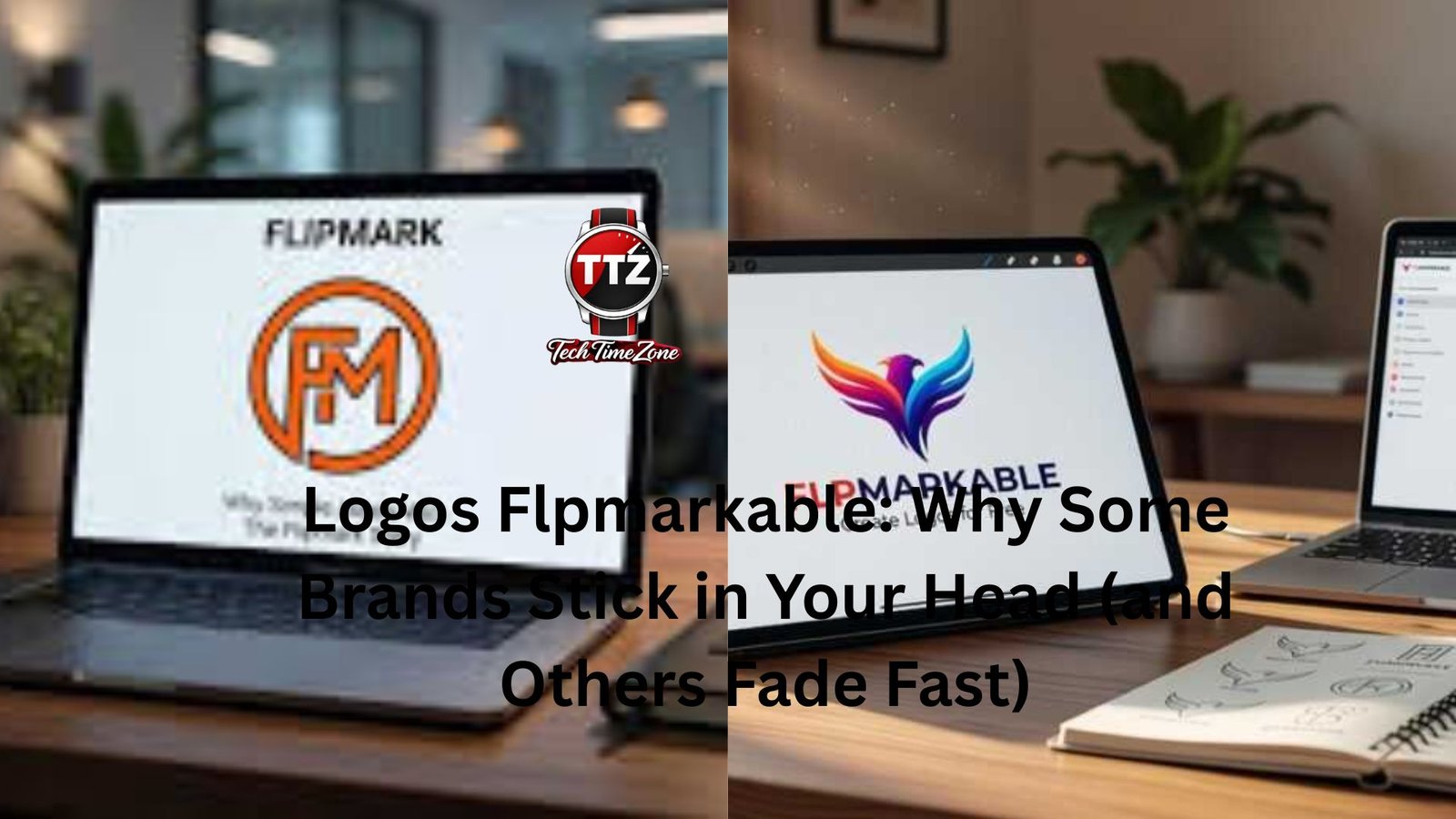
That gap? That’s where logos flpmarkable comes in.
It’s not a formal term you’ll find in design textbooks, but it captures something real: the difference between a logo that merely exists and one that leaves a mark—fast, deep, and lasting.
What “Flpmarkable” Really Means in Practice
Let’s not overcomplicate it. A flpmarkable logo is one that hits quickly and stays put.
Think about how you recognize brands when you’re tired, distracted, or scrolling too fast. You’re not analyzing. You’re reacting.
A flpmarkable logo works in that split-second window.
It’s not just about being pretty. Plenty of beautiful logos are forgettable. What matters is whether the design creates a mental “hook.”
Take a simple scenario. You’re walking past a row of coffee shops. One has a clean but generic logo—nice font, neutral colors. Another has a slightly quirky icon, maybe a bold shape or a distinctive mark. You don’t consciously decide, but your brain leans toward the one it can recall faster.
That’s flpmarkable at work.
The Speed Factor: Recognition Beats Complexity
Here’s the thing most people miss: recognition speed matters more than detail.
Designers sometimes fall into the trap of adding meaning—symbols, layers, hidden messages. And sure, those can be clever. But if it takes effort to “get it,” you’ve already lost most people.
Flpmarkable logos are quick.
They don’t ask for attention. They grab it.
Think of the simplest marks you know. A swoosh. A bitten apple. A golden arch. You don’t decode them—you just know.
Now imagine those same logos with extra gradients, textures, and intricate elements. They might look impressive up close, but they’d lose that instant punch.
So if a logo needs explaining, it’s probably not flpmarkable.
Familiar, But Not Boring
There’s a delicate balance here. If a logo is too strange, people don’t trust it. If it’s too familiar, it disappears into the background.
Flpmarkable logos sit right in the middle.
They borrow just enough from what people already recognize—basic shapes, readable forms—but add a twist that makes the brain pause for a fraction of a second.
That pause is important. It’s where memory starts forming.
Picture a local bakery. If they use a completely standard script font with a wheat icon, it blends in with a hundred others. But if they keep the warmth of the script and tweak one letter into a subtle visual element—maybe the “B” looks like a loaf—that’s enough to make it stick.
Not loud. Just distinct.
Emotion Does More Work Than Logic
Let’s be honest, nobody forms a connection with a logo because it’s technically well-constructed.
People respond to how it feels.
A flpmarkable logo taps into emotion quickly, even if it’s subtle. It might feel friendly, bold, calm, or slightly rebellious. The key is that the feeling is clear and immediate.
Here’s a small real-life moment. You’re choosing between two apps to download. One has a cold, sharp logo that feels corporate. The other feels softer, more human. You don’t analyze why—you just trust one more.
That emotional nudge matters more than perfect alignment or clever symbolism.
Simplicity Isn’t Minimalism (There’s a Difference)
A lot of people hear “simple” and think “minimal.” They strip everything down until the logo barely says anything.
That’s not the goal.
Simplicity is about clarity, not emptiness.
A flpmarkable logo can be bold, detailed, even slightly messy—as long as the core idea is easy to grasp.
Think about hand-drawn style logos. Some of them are full of character and imperfection, yet instantly recognizable. Why? Because the underlying shape and idea are clear.
So instead of asking “Can I remove more?” a better question is “Can someone understand this instantly?”
That shift changes everything.
The Role of Repetition (and Why First Impressions Still Matter More)
Yes, repetition helps any logo stick. You see something enough times, and it becomes familiar.
But here’s where flpmarkable logos have an advantage: they don’t rely on repetition as much.
They make a strong first impression.
If a logo only works after the tenth exposure, it’s working too hard. In today’s fast-moving environment, you might not get ten chances.
Imagine launching a new brand. You’ve got a few seconds on social media, maybe a glance on a crowded page. A flpmarkable logo increases the odds that someone remembers you after just one interaction.
That’s a huge edge.
Context Changes Everything
A logo doesn’t live in isolation. It shows up on screens, packaging, signs, and tiny app icons.
Some logos look great in a presentation but fall apart in real life.
Flpmarkable logos hold up across contexts.
They’re readable when small. Recognizable in black and white. Still clear when partially seen.
Think about spotting a logo on a moving bus or a blurry ad. You’re not seeing it perfectly. Yet some marks still come through.
That’s not luck. That’s intentional design.
Why Trends Can Hurt More Than Help
It’s tempting to follow what’s popular—gradient fades, geometric fonts, ultra-flat icons. And sure, trends can make a logo feel current.
But they can also make it forgettable.
When everyone uses the same visual language, differentiation disappears.
Flpmarkable logos don’t chase trends too closely. They might borrow elements, but they don’t depend on them.
A quick example: a few years ago, a wave of brands simplified their logos into nearly identical sans-serif wordmarks. Clean? Yes. Memorable? Not really.
You could swap the names and barely notice.
That’s the opposite of flpmarkable.
Small Details That Quietly Do a Lot of Work
Not everything about a logo needs to be obvious.
Sometimes it’s the tiny details that make it stick—subtle spacing, a unique curve, a slightly unexpected proportion.
You might not consciously notice these things, but your brain does.
Here’s a simple scenario. Two logos use the same font. One feels generic. The other feels refined. The difference? Minor adjustments to spacing and alignment.
One feels “off” in a way you can’t explain. The other feels right.
Flpmarkable logos often rely on these quiet refinements. They don’t scream for attention, but they hold it.
When a Logo Tries Too Hard
You can usually tell.
It’s overloaded with meaning. Every element represents something. There’s a story behind every shape.
And yet… it doesn’t land.
That’s because clarity beats cleverness.
If someone needs a backstory to appreciate a logo, it’s not doing its job. Most people won’t stick around for the explanation.
A flpmarkable logo doesn’t try to say everything. It picks one strong idea and delivers it cleanly.
Making It Work for Smaller Brands
You don’t need a massive budget or a global team to create something flpmarkable.
In fact, smaller brands often have an advantage. They can take risks. They can be more personal.
Think of a small business owner choosing a logo. Instead of aiming for “professional” in the generic sense, they lean into something that actually reflects their personality.
Maybe it’s slightly imperfect. Maybe it’s a bit bold. But it feels real.
That authenticity can make a logo far more memorable than something polished but lifeless.
Testing in the Real World (Not Just on a Screen)
A logo might look great on your laptop. That’s not enough.
Try this instead: glance at it for one second, then look away. Can you recall it?
Shrink it down. Does it still make sense?
Show it to someone briefly and ask what they remember—not what they think, just what stuck.
These quick, imperfect tests reveal more than hours of fine-tuning on a design file.
Flpmarkable logos pass these kinds of tests without needing explanation.
Why This Actually Matters
It’s easy to dismiss logos as just visuals. But they carry a lot of weight.
They’re often the first point of contact. The shortcut people use to recognize you. The anchor for everything else you build.
If the logo doesn’t stick, you’re always starting from scratch.
A flpmarkable logo doesn’t solve everything, but it gives you a head start. It makes your brand easier to remember, easier to trust, and easier to choose.
That’s not a small thing.
The Takeaway
Not every logo needs to be iconic. But every logo should aim to be remembered.
That’s what logos flpmarkable is really about.
It’s the difference between something people glance at and something they carry with them—even briefly.
If you’re working on a logo, don’t just ask if it looks good. Ask if it sticks. Ask if it’s clear in a split second. Ask if it feels like something people would recognize again without effort.
Because in the end, the logos that win aren’t the ones with the most meaning or the cleanest grids.
They’re the ones people don’t forget.