Financial markets have changed dramatically over the past decade. What once required phone calls, trading floors, and hours of manual analysis can now happen in seconds through advanced digital systems. At the center of this shift is FTAsiaTrading technology, a term increasingly associated with modern trading infrastructure, data-driven decision-making, and faster market execution.
For traders, investors, and businesses operating in Asian and global markets, technology is no longer a supporting tool. It has become the foundation of how opportunities are identified, analyzed, and acted upon.
The interesting part is that most people only see the results. They notice faster transactions, real-time updates, and smoother trading experiences. What they don’t always see is the complex technology working behind the scenes to make all of it possible.
Why Trading Technology Matters More Than Ever
A few years ago, a trader might spend an entire morning reviewing charts, reading market news, and manually placing orders. Today, much of that process can happen almost instantly.
Markets move quickly. Sometimes a major announcement can shift prices within seconds. In that environment, speed isn’t just convenient. It’s essential.
FTAsiaTrading technology reflects this broader move toward intelligent trading systems that help market participants process information faster and respond with greater accuracy.
Think about a simple example. Imagine two investors watching the same stock. One receives delayed information and places an order several minutes later. The other uses a platform powered by advanced technology that delivers real-time data and immediate execution. Even a small difference in timing can significantly affect the outcome.
That’s why technology has become such a critical competitive advantage.
The Shift From Manual Processes to Smart Automation
One of the biggest developments in modern trading is automation.
Automation doesn’t mean removing human decision-making entirely. Instead, it reduces repetitive tasks and allows traders to focus on strategy rather than administration.
FTAsiaTrading technology often emphasizes automated workflows that streamline various parts of the trading process. These systems can monitor market conditions, execute predefined actions, and alert users when specific criteria are met.
Here’s the thing. Markets generate enormous amounts of data every second. No human can realistically monitor everything at once.
Automated systems help solve that problem by scanning information continuously and identifying patterns that might otherwise be missed.
For active traders, this can save time. For institutions handling large transaction volumes, it can improve operational efficiency.
Real-Time Data Is the New Currency
In trading, information has always been valuable.
Now it’s valuable at a completely different scale.
Modern platforms rely on real-time market feeds that deliver updates as events unfold. This allows traders to react based on current conditions rather than outdated information.
FTAsiaTrading technology is often associated with integrating multiple data sources into a single environment. Instead of jumping between news platforms, charting tools, and market feeds, users can access critical information in one place.
Let’s be honest. Making decisions based on yesterday’s information rarely works in today’s markets.
A trader monitoring currency fluctuations, for example, may need to respond immediately to economic announcements or geopolitical developments. Delayed data can lead to missed opportunities or unnecessary risks.
That’s why real-time access has become one of the most important features in modern trading environments.
The Growing Role of Artificial Intelligence
Artificial intelligence continues to influence nearly every industry, and trading is no exception.
Many modern trading systems use AI-powered tools to identify trends, analyze market behavior, and generate insights from large datasets.
The goal isn’t to replace traders. It’s to help them make more informed decisions.
Consider a scenario where thousands of financial reports, news articles, and market indicators are released every day. Reviewing all of that information manually would be nearly impossible.
Advanced analytical systems can process the data much faster and highlight developments that deserve attention.
FTAsiaTrading technology represents part of this larger movement toward smarter decision-support systems. By combining machine learning models with market intelligence, traders can gain a clearer picture of changing conditions.
Of course, no technology can predict markets perfectly. Financial markets remain influenced by human behavior, unexpected events, and shifting economic conditions.
Still, having better analytical tools can make a meaningful difference.
Security Has Become a Core Priority
As trading platforms become more sophisticated, security becomes even more important.
Financial systems handle sensitive personal information, account data, and high-value transactions. Any weakness can create serious consequences.
That’s why modern trading technology places significant emphasis on cybersecurity measures.
Strong encryption, secure authentication processes, and continuous monitoring have become standard expectations rather than optional features.
Imagine logging into a trading account from a new device. Many platforms now require additional verification before granting access. While it may seem like an extra step, it helps protect users from unauthorized activity.
FTAsiaTrading technology reflects the growing recognition that trust and security are essential parts of any successful digital trading environment.
Without them, even the most advanced platform would struggle to earn user confidence.
Mobile Trading Is Reshaping User Expectations
Not long ago, trading typically happened from desktop workstations equipped with multiple monitors.
Today, people expect access from almost anywhere.
Whether someone is traveling, working remotely, or simply away from their desk, mobile accessibility has become a basic requirement.
Modern trading technology supports this shift by providing responsive platforms that function across smartphones, tablets, and computers.
This flexibility changes how people interact with financial markets.
An investor waiting at an airport can review portfolio performance. A trader can receive market alerts during a meeting. A business owner can monitor currency movements while visiting clients.
The ability to stay connected in real time creates a more dynamic trading experience.
FTAsiaTrading technology aligns with this trend by supporting accessibility without sacrificing performance or functionality.
Better Analytics Lead to Better Decisions
Data alone isn’t enough.
What matters is understanding what that data means.
This is where advanced analytics tools become valuable.
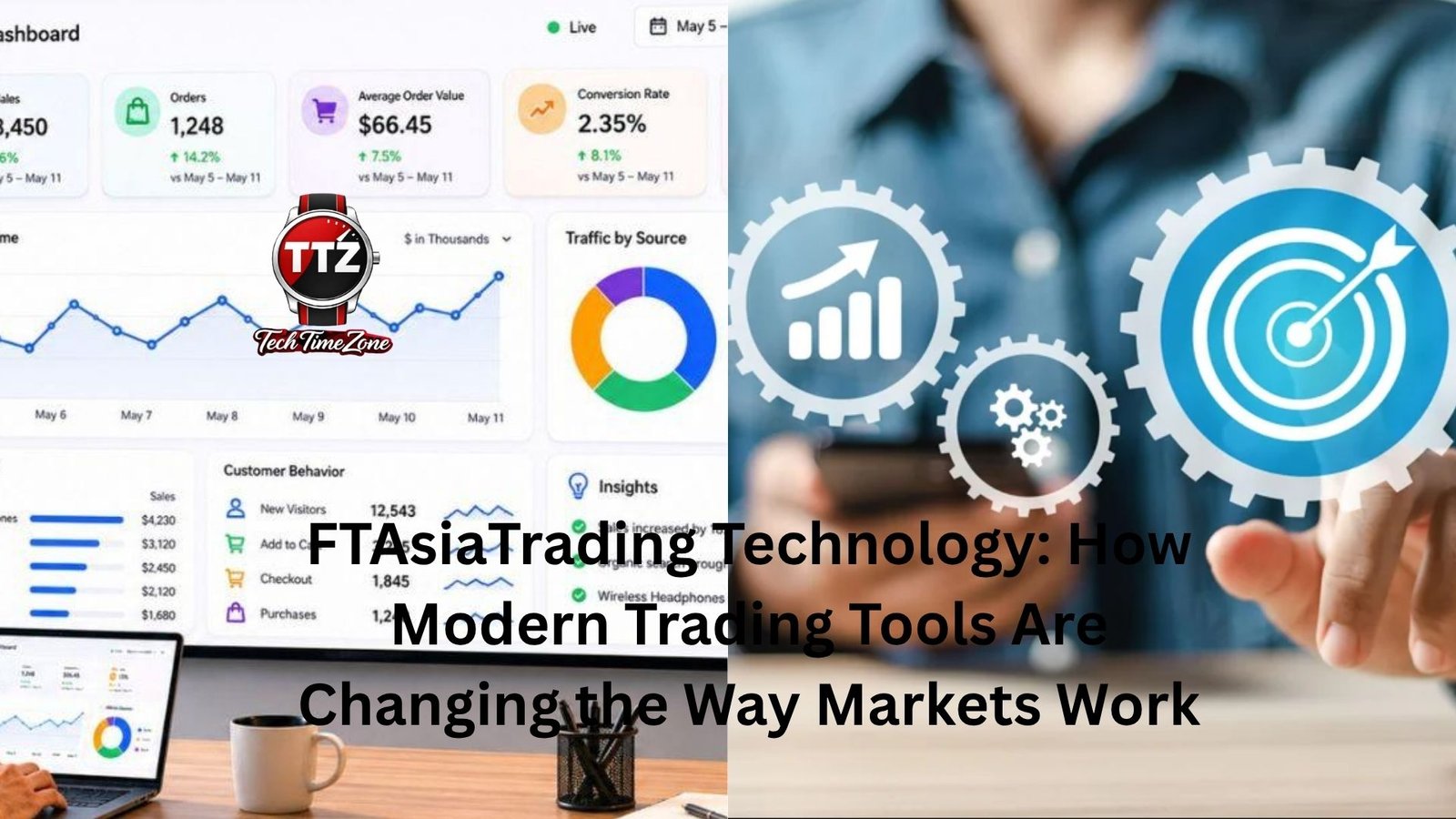
Modern trading platforms increasingly provide visual dashboards, performance tracking systems, predictive models, and customizable reports. These tools help users identify trends that might otherwise remain hidden.
For example, a trader may notice recurring patterns in asset performance during specific market conditions. With the right analytics tools, those observations become easier to validate and apply.
FTAsiaTrading technology supports data interpretation rather than simply data collection.
That’s an important distinction.
The most successful traders are rarely those with access to the most information. They’re often the ones who can interpret information effectively and act with confidence.
The Importance of Speed and Execution
Speed has always mattered in trading, but technological advances have raised expectations dramatically.
Milliseconds can influence outcomes in highly competitive markets.
Modern trading systems focus heavily on reducing delays between decision-making and execution.
This involves optimizing infrastructure, improving network performance, and minimizing technical bottlenecks.
For everyday investors, the difference may seem small. For professional traders managing large positions, execution speed can directly affect profitability.
FTAsiaTrading technology reflects industry efforts to create faster, more reliable systems capable of handling increasing transaction volumes without sacrificing stability.
As markets continue evolving, efficient execution will likely remain a key area of innovation.
Challenges That Come With Advanced Trading Technology
Despite its advantages, technology isn’t a perfect solution.
Greater complexity can introduce new challenges.
Users must understand how to interpret automated recommendations rather than blindly following them. Systems require maintenance, updates, and ongoing monitoring.
There’s also the issue of information overload.
Ironically, having access to too much data can sometimes make decision-making more difficult.
Successful traders learn how to filter information and focus on what truly matters.
Another challenge involves adapting to constant change. Technology evolves quickly, and platforms must continue improving to remain relevant.
The organizations that invest in innovation tend to stay competitive, while those relying on outdated systems often struggle to keep pace.
What the Future May Look Like
The future of trading technology will likely involve even greater integration between data analytics, automation, and intelligent decision-support systems.
We’re already seeing signs of this shift.
Platforms continue becoming more personalized. Analytical tools are growing more sophisticated. Cross-market connectivity is expanding.
As computing power increases and technology matures, traders will gain access to deeper insights and more efficient workflows.
FTAsiaTrading technology sits within this broader transformation, reflecting how digital innovation continues reshaping financial markets across Asia and beyond.
While the specific tools will evolve, the underlying goal remains the same: helping market participants make faster, smarter, and more informed decisions.
Final Thoughts
FTAsiaTrading technology represents more than a collection of software tools. It reflects the ongoing modernization of trading itself.
From real-time data and automation to advanced analytics and stronger security, technology now influences nearly every stage of the trading process. The days of relying solely on manual methods are rapidly fading.
For anyone involved in financial markets, understanding how these technologies work is becoming increasingly important. You don’t need to be a technical expert, but having a clear grasp of the systems shaping modern trading can provide a valuable advantage.
Markets will continue changing. New tools will emerge. Expectations will evolve.
The constant factor is that technology will remain at the center of how trading operates, grows, and adapts in the years ahead.