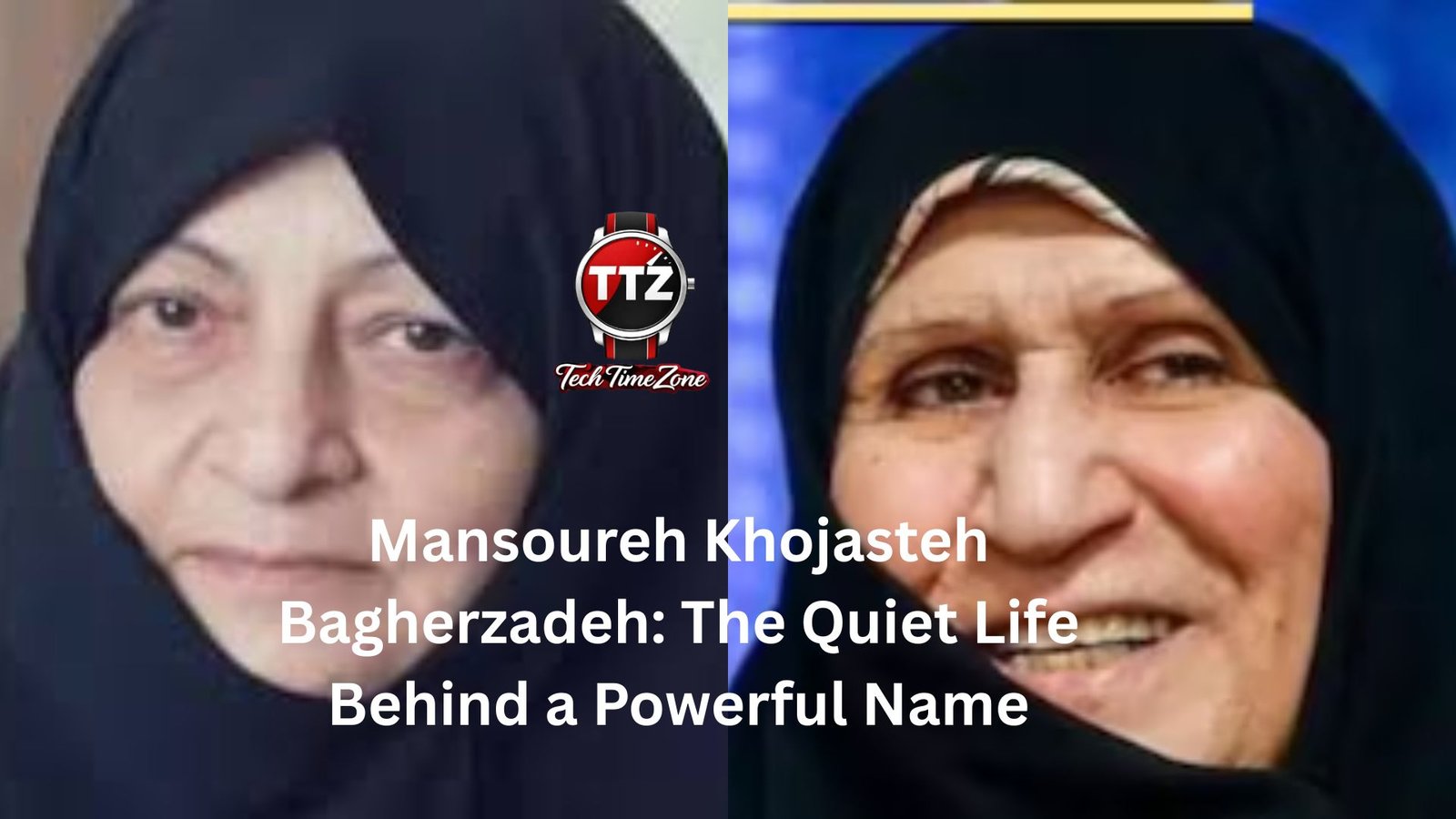
When people talk about influence in Iran, they usually point to the loud voices. The politicians giving speeches, the clerics issuing statements, the figures constantly in the headlines. But sometimes, the most interesting stories sit just outside that spotlight. That’s where Mansoureh Khojasteh Bagherzadeh comes in.
She isn’t a public speaker. She doesn’t give interviews. You won’t find a stream of quotes or personal opinions attached to her name. And yet, her position places her right at the center of one of the most powerful households in Iran.
That contrast alone makes her worth paying attention to.
A Life Largely Out of View
Let’s be honest. In a world where people share every detail of their lives online, someone like Mansoureh Khojasteh Bagherzadeh feels almost unusual.
There’s very little publicly available about her early years. She was born in Iran into a religious family, and like many women of her generation, her life path was shaped by culture, family, and faith long before public visibility ever became a factor.
Then came her marriage to Ali Khamenei. At the time, he wasn’t yet the Supreme Leader. He was a cleric involved in revolutionary activities, a man deeply engaged in political and religious movements that would eventually reshape Iran.
Now imagine that for a second.
You marry someone who’s committed to a cause bigger than himself. There’s uncertainty. Risk. Long stretches of absence. That’s not a typical married life, and it certainly wasn’t an easy one.
But it’s the kind of life that quietly builds resilience.
Marriage in the Middle of Change
The timing of their marriage matters. It happened during a period when Iran was on the edge of massive transformation. The lead-up to the Iranian Revolution wasn’t just political. It affected everyday life. Families. Stability. Expectations.
For someone like Mansoureh Khojasteh Bagherzadeh, that meant stepping into a role that would constantly evolve.
At first, she was the wife of a revolutionary figure. Then, the wife of a president. And eventually, the spouse of the country’s Supreme Leader.
Each stage comes with its own pressure. Different expectations. Different levels of visibility, even if you choose to stay private.
And she did choose that.
Choosing Privacy in a Public World
Here’s the thing. Not all influence comes from being seen.
Some people operate behind the scenes, shaping environments rather than headlines. Mansoureh Khojasteh Bagherzadeh fits into that category.
There are no widely circulated speeches. No public campaigns tied to her name. No personal branding. In today’s terms, it’s almost the opposite of what we expect from someone connected to power.
But that silence tells you something.
It suggests a deliberate decision to separate personal life from political life. To keep family matters contained. To avoid becoming a public figure simply by association.
And that’s harder than it sounds.
Think about how often people are pulled into public attention just because of who they’re related to. Now imagine actively resisting that pull for decades.
That takes discipline.
Family Life Behind Closed Doors
While official details are limited, it’s known that Mansoureh Khojasteh Bagherzadeh and Ali Khamenei have children together. Their family has largely remained out of public drama, which is notable given the level of scrutiny typically placed on political families.
Picture a household where the father holds one of the highest positions in the country. Security concerns are constant. Public perception is always in the background. Every action could potentially be interpreted politically.
In that kind of environment, maintaining a sense of normal family life becomes a challenge.
Small moments start to matter more.
A shared meal. A quiet conversation. A routine day without headlines.
Those things don’t show up in history books, but they shape the people inside the home.
The Role of Religious and Cultural Values
To understand Mansoureh Khojasteh Bagherzadeh, you have to consider the cultural context she comes from.
Iranian society, especially in more traditional and religious circles, often places a strong emphasis on family structure, modesty, and defined roles within the household. For many women, influence is expressed through family, upbringing, and community rather than public platforms.
That doesn’t mean a lack of impact.
In fact, shaping a household that includes future leaders or influential figures can have long-term effects that are just as significant as public actions.
It’s a quieter form of contribution. Less visible, but not necessarily less important.
Living Alongside Power
Being close to power changes how you experience the world.
Even if you’re not the one making decisions, you’re still part of that ecosystem. You hear things others don’t. You see the pressure up close. You witness the human side of leadership, the parts that never make it into official statements.
Now imagine carrying that awareness without sharing it publicly.
That’s a unique position to be in.
For Mansoureh Khojasteh Bagherzadeh, life isn’t just about her own identity. It’s intertwined with one of the most influential political figures in the region. And yet, she has managed to maintain a separate, quieter presence.
Why Her Story Still Matters
You might wonder why someone with so little public visibility deserves this level of attention.
Fair question.
But influence isn’t always about visibility. Sometimes it’s about proximity, consistency, and the ability to remain steady while everything around you changes.
Think of it like this.
In any major organization, there are people whose names you never hear, but without them, things would fall apart. They provide stability. Continuity. A sense of grounding.
Mansoureh Khojasteh Bagherzadeh represents that kind of presence on a much larger scale.
The Power of Staying Out of the Spotlight
Here’s a slightly uncomfortable truth in today’s world. We often assume that if something isn’t visible, it isn’t significant.
But that’s not always accurate.
There’s a kind of strength in staying private, especially when you have every reason not to. It allows for control over your narrative. It reduces noise. It keeps the focus where you want it.
In her case, that focus has never been on personal recognition.
And that’s rare.
A Different Kind of Legacy
Legacy usually brings to mind big speeches, major decisions, public achievements.
But there’s another kind.
It’s built through consistency. Through supporting roles that don’t get headlines. Through maintaining a stable environment over long periods of time.
Mansoureh Khojasteh Bagherzadeh’s legacy, if you can call it that, fits into this quieter category.
It’s not something you can easily measure or summarize. It’s woven into the broader story of a family that sits at the center of Iran’s political structure.
Final Thoughts
Some lives are easy to document. They leave behind a trail of quotes, interviews, and public moments that tell you exactly who the person is.
Others don’t.
Mansoureh Khojasteh Bagherzadeh belongs to the second group. Her story isn’t told through headlines or speeches. It’s found in the spaces around power, not at the center of it.
And maybe that’s the point.
Not every influential life needs to be loud to matter. Sometimes, the quiet ones hold their own kind of weight.