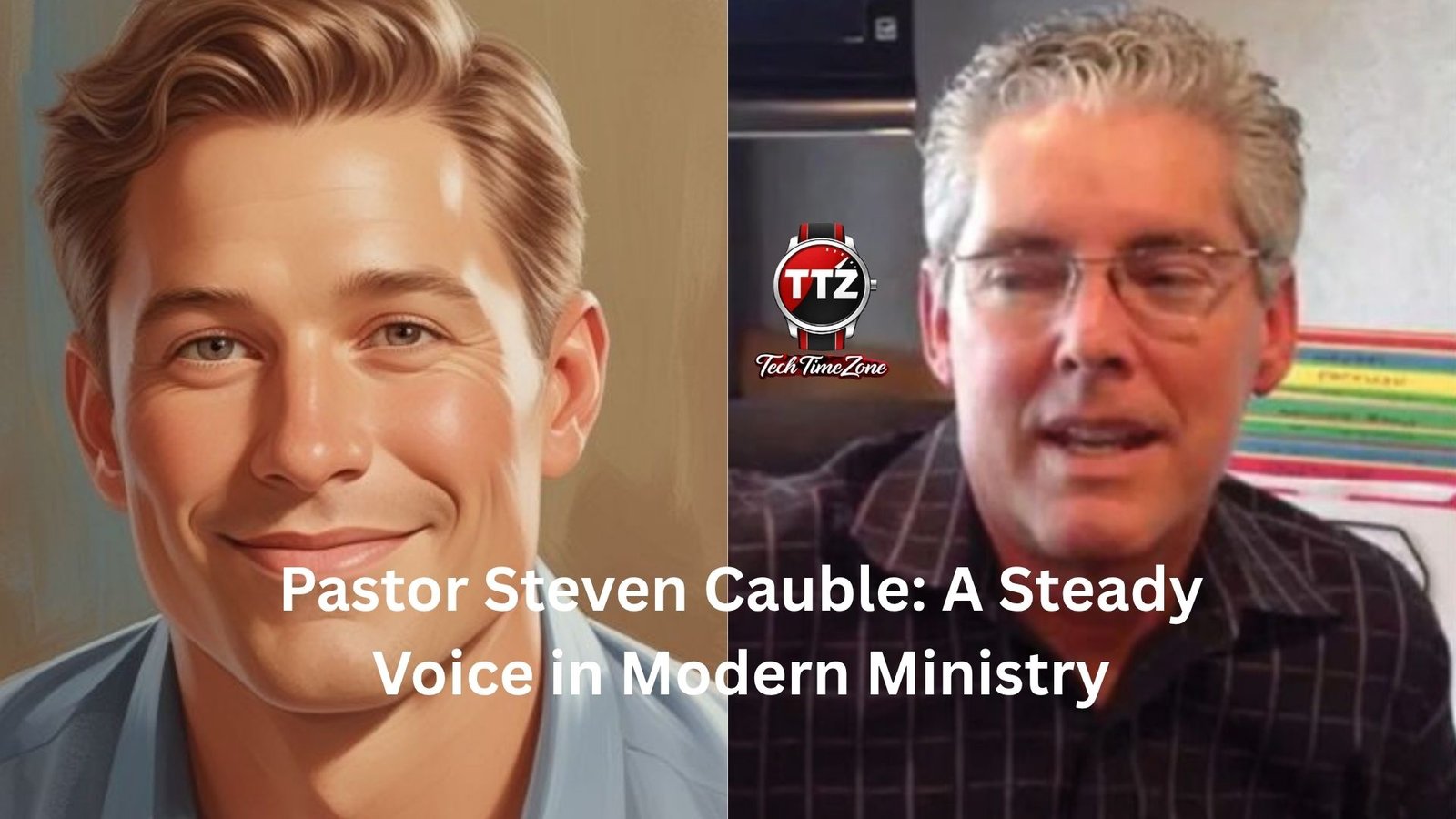
Church leaders often become known for one loud moment. A viral sermon. A controversy. A bestselling book. Pastor Steven Cauble has built a reputation in a very different way. Quiet consistency. Week after week. Year after year.
That may not sound flashy, but in today’s world, it stands out.
People who follow Steven Cauble’s ministry often describe him the same way: grounded, approachable, and deeply focused on practical faith instead of performance. And honestly, that balance is harder to find than it should be.
A lot of modern ministry feels polished to the point of distance. Everything is curated. Every sermon clip sounds engineered for social media. Cauble’s style leans the other direction. More conversation than production. More substance than spectacle.
That’s probably why people connect with him.
A Ministry Style Built on Everyday Faith
Some pastors preach as if every message needs to feel like a stadium event. Steven Cauble tends to speak more like someone sitting across the table from you after a difficult week.
That matters.
Most people aren’t walking into church looking for complicated theology debates. They’re trying to figure out how to survive job pressure, family stress, anxiety, grief, or plain exhaustion. A pastor who can connect spiritual ideas to ordinary life usually reaches people more deeply than someone delivering polished motivational speeches.
Cauble’s teaching style appears to land in that practical space.
He often emphasizes daily spiritual habits rather than dramatic emotional moments. Things like prayer, patience, forgiveness, discipline, and consistency. Not exactly trendy topics, but they’re the kinds of things that shape real lives over time.
Here’s the thing. Sustainable faith usually grows quietly.
You see it in small moments. A father becoming more patient with his kids. A couple learning to communicate better. Someone choosing hope instead of bitterness after a rough season. Those stories rarely trend online, but they matter more than most viral clips.
That perspective seems central to Steven Cauble’s ministry approach.
Why People Relate to Pastors Like Steven Cauble
Relatability has become one of the most valuable qualities in leadership, especially in churches.
People can spot manufactured authenticity almost instantly now. They’ve heard enough rehearsed lines and carefully branded personalities to know the difference between someone performing and someone speaking honestly.
Pastor Steven Cauble’s appeal appears to come from a simpler place. He communicates in a way that feels accessible.
Not simplistic. Accessible.
There’s a difference.
A good pastor doesn’t need to use complicated language to sound intelligent. In fact, some of the strongest communicators are the ones who can explain difficult spiritual ideas in everyday terms.
Think about how people actually talk after church. Nobody says, “The sermonic exposition regarding existential sanctification deeply resonated with me.” They say, “That message hit home.”
That’s the goal.
Cauble’s sermons and leadership style seem designed around clarity rather than impressiveness. And honestly, more pastors could learn from that.
The Shift Happening in Church Leadership
Modern church culture has changed dramatically over the past decade.
There was a time when charisma alone could carry a ministry for years. Big personality. Big stage presence. Big promises. But many churchgoers have become more cautious, especially after watching highly visible ministry failures unfold publicly.
Now people look for steadiness.
They want leaders who seem emotionally healthy. Leaders who don’t constantly need attention. Leaders who can admit struggles without turning vulnerability into branding.
Steven Cauble represents a style of ministry that fits this shift.
Not every pastor needs to become an internet celebrity. In fact, many people are actively moving away from that model. They’re looking for communities where spiritual growth feels genuine rather than performative.
You can see this in conversations happening across churches everywhere.
Someone visits a congregation after years away and says, “I just wanted something real.” That word keeps showing up. Real.
It’s not always easy to define, but people know when they feel it.
Teaching That Connects Beyond Sunday
One challenge many pastors face is making sermons stick after the service ends.
A message can sound inspiring in the moment but disappear by Monday morning. Real impact usually comes from practical application. Something people can actually carry into daily life.
Steven Cauble’s approach often centers on this kind of usable faith.
Instead of presenting spirituality as something distant or abstract, he seems to frame it as part of normal living. How you respond during conflict. How you treat people when stressed. Whether your private character matches your public image.
That kind of teaching resonates because it’s testable.
Anyone can feel inspired for an hour. Living differently during a hard week is another story.
Let’s be honest, most spiritual growth happens in ordinary situations nobody applauds. Traffic jams. Financial pressure. Difficult conversations. Long seasons where nothing exciting seems to happen.
Pastors who acknowledge that reality usually earn deeper trust from their congregations.
The Importance of Consistency
Consistency sounds boring until you experience inconsistency.
Then suddenly it becomes one of the most valuable traits a leader can have.
Church communities especially depend on stable leadership. People often come carrying complicated personal histories, disappointments, or emotional wounds. A calm, dependable pastor can create an environment where healing becomes possible.
Steven Cauble’s ministry reputation reflects this kind of steady leadership.
Not dramatic highs and lows. Not constant reinvention. Just ongoing commitment to serving people and teaching scripture in a grounded way.
There’s something reassuring about leaders who don’t seem obsessed with staying culturally relevant every five minutes.
Of course, churches should engage modern issues thoughtfully. But there’s a difference between engaging culture and chasing attention.
People notice that difference.
Balancing Truth and Compassion
One reason ministry can become difficult is the tension between conviction and compassion.
Lean too far toward harshness and people feel condemned. Lean too far toward avoiding difficult truths and faith loses depth. The best pastors somehow manage both honesty and grace at the same time.
That balance appears important in Steven Cauble’s teaching.
He doesn’t seem interested in creating unnecessary division or outrage for attention. Some public figures build entire platforms around controversy because controversy drives clicks. But constant outrage eventually exhausts people.
Most churchgoers aren’t looking for a pastor who acts like a cable news personality.
They want wisdom. Perspective. Guidance that feels thoughtful instead of reactive.
And honestly, the older many people get, the more they value calm leadership over loud leadership.
Ministry in the Digital Age
Every pastor today faces a strange challenge. Ministry no longer stays inside church walls.
A sermon can be clipped, reposted, criticized, praised, or misunderstood within hours. Social media rewards extreme statements and quick reactions, which isn’t always healthy for spiritual conversations.
Pastors who maintain a grounded voice in that environment deserve credit.
Steven Cauble’s style seems less focused on building online celebrity and more focused on actual ministry work. That distinction matters because audiences can usually tell when spiritual content becomes more about personal branding than helping people.
Now, that doesn’t mean pastors should avoid technology. Digital outreach can genuinely help people who might never enter a church building otherwise. But there’s a healthy way to use platforms and an unhealthy way.
The healthiest leaders tend to remember that online attention isn’t the same thing as meaningful impact.
A viral clip may inspire someone for thirty seconds. Consistent pastoral care can change a life over years.
Those are very different things.
Why Quiet Leadership Still Matters
We live in an era that rewards noise.
The loudest voices often dominate conversations, even when they have little substance behind them. Quiet leadership can seem less exciting at first glance, but it usually produces deeper long-term influence.
Steven Cauble fits into that quieter leadership category.
He represents the kind of pastor who focuses less on building a personal empire and more on building stable spiritual communities. That approach may never generate endless headlines, but it often creates stronger foundations.
And really, churches need that right now.
Many people are spiritually tired. Tired of scandals. Tired of ego-driven leadership. Tired of religious performance. A steady, thoughtful pastor becomes valuable in that environment because trust has become harder to earn.
Sometimes the most powerful leadership looks surprisingly ordinary.
Showing up consistently. Listening carefully. Teaching clearly. Staying humble during success. Remaining faithful during difficult seasons.
Those things sound simple. They aren’t.
The Human Side of Pastoral Work
People sometimes forget pastors are human beings dealing with the same pressures everyone else faces.
Family responsibilities. Stress. Discouragement. Fatigue. Personal doubts. Yet they’re also expected to guide others spiritually through difficult moments.
That’s a heavy responsibility.
Good pastors learn how to remain emotionally present without pretending to be perfect. Steven Cauble’s public ministry style reflects a more human-centered approach rather than projecting untouchable perfection.
That matters because unrealistic leadership images eventually collapse.
Congregations don’t need flawless leaders. They need honest ones.
A pastor admitting, “Life can be difficult, but faith still matters,” often connects more deeply than someone pretending every problem disappears instantly through positive thinking.
Real people respond to real honesty.
What People Can Learn From Steven Cauble’s Approach
Even outside church settings, there’s something useful about the leadership style Steven Cauble represents.
You don’t have to be a pastor to appreciate the value of consistency, humility, and practical wisdom. Those qualities work in parenting, business, friendships, coaching, teaching, and nearly every area of life.
A lot of leadership advice today focuses on visibility. Build your brand. Grow your audience. Increase influence.
But sustainable influence usually comes from trust.
And trust builds slowly.
It grows through repeated actions over time. Through reliability. Through treating people well when there’s nothing to gain from it. Through remaining grounded while others chase attention.
That kind of influence may develop quietly, but it tends to last longer.
Final Thoughts
Pastor Steven Cauble represents a ministry style that many people are craving right now. Practical instead of performative. Grounded instead of flashy. Consistent instead of attention-driven.
That doesn’t make headlines very often. But it shapes lives.
In a culture filled with noise, there’s something refreshing about leaders who simply keep showing up with clarity, compassion, and steady conviction. Those qualities may not trend online every day, yet they often leave the deepest impact over time.
And maybe that’s the real measure of meaningful ministry after all.