The Digital Nurse: How Nursing Informatics and Advanced EHR Software are Reshaping Patient Care
The healthcare industry is undergoing a massive digital transformation, and right at the center of this revolution are nurses. For decades, the image of a nurse involved clipboard charts, handwritten vital logs, and rows of physical filing cabinets. Today, that reality has completely shifted. Modern healthcare environments rely on highly sophisticated technologies designed to track data, predict patient risks, and streamline communication. This intersection of clinical nursing skills and advanced computer science is a rapidly growing field that is changing how medical professionals save lives every single day.
For students entering the healthcare field, mastering these digital tools is just as critical as learning how to take a pulse. Nursing programs around the world now place a heavy emphasis on healthcare data tracking systems, forcing students to quickly learn complex database mechanics alongside clinical protocols. When the pressure of mastering clinical rotations mixes with tough data-analysis coursework, many future healthcare professionals look for specialized academic support. Securing reliable nursing assignment help through myassignmenthelp ensures that complex informatics theories, data privacy laws, and system architectures are clearly translated into high-scoring research papers without pulling students away from their vital hands-on hospital training.
Understanding Nursing Informatics
To understand how technology is reshaping hospitals, we first need to look at nursing informatics. In simple terms, this field is the science of gathering, analyzing, and managing health data to improve patient outcomes. It bridges the gap between raw clinical data and real-world medical care. Informatics nurses work closely with software developers to design systems that make sense in a fast-paced emergency room or intensive care unit.
Instead of just looking at one patient’s chart, informatics allows a hospital network to look at data from thousands of patients simultaneously. This helps identify broader health trends, track the spread of infectious illnesses, and evaluate whether a specific treatment plan is actually working across a large demographic. For a regular floor nurse, informatics means having access to smart dashboards that highlight critical patient updates instantly, removing the guesswork from daily clinical decisions.
The Foundation of Data-Driven Healthcare
The core purpose of nursing informatics can be broken down into a structured lifecycle. Information flows from the patient directly into an actionable clinical strategy through four distinct stages:

- Raw Data Collection: The initial capture of vital signs, symptoms, and medical history at the bedside.
- Information Processing: The EHR software automatically organizes, aggregates, and categorizes this data into readable trends.
- Knowledge Application: The nurse evaluates the organized trends against clinical guidelines and medical history.
- Wise Clinical Decision: Activating a precise, targeted medical intervention based on empirical data rather than speculation.
The Evolution of Electronic Health Records (EHR)
The most visible piece of health technology used today is the Electronic Health Record, commonly known as an EHR. In the past, paper charts were easily lost, difficult to read due to messy handwriting, and impossible to share quickly between a family doctor and a hospital specialist. Modern EHR systems have completely solved these issues by creating a centralized, digital profile for every single patient.
When a nurse updates a patient’s vitals or inputs a symptom into an EHR system like Epic or Cerner, that data is instantly accessible to the entire medical team. If a specialist on the other side of the country needs to review a patient’s lab results, they can log in securely and see them in real time. This instant availability of information dramatically speeds up target treatments and prevents medical errors caused by missing files.
Standardizing Clinical Workflows
Advanced EHR platforms do not just store information; they standardize how care is delivered across entire hospital networks. By using template-driven documentation, every nurse follows the exact same clinical path when assessing a patient. This ensures no critical assessment questions are skipped during a busy shift. Furthermore, centralized records eliminate redundant testing, saving patients from undergoing unnecessary x-rays or blood draws simply because a previous doctor’s paperwork was misplaced.
Key Benefits of Advanced EHR Systems
The transition from paper files to advanced EHR software brings massive advantages to modern clinical environments. These systems do far more than just store text; they actively analyze data to protect patients.
- Reduction in Medication Errors: Advanced software automatically cross-references a patient’s known allergies and current medication list against any new prescriptions written by a doctor, alerting the nurse if there is a dangerous drug interaction.
- Predictive Health Analytics: Many modern EHR platforms use machine learning algorithms to track changes in vital signs over time. If a patient’s blood pressure drops slowly while their heart rate rises, the system can flag early signs of sepsis before visible symptoms appear.
- Streamlined Communication: Instead of relying on phone calls or pages, nurses, doctors, pharmacists, and physical therapists can communicate directly inside the patient’s digital chart, ensuring everyone operates on the exact same information.
- Enhanced Data Security: Modern health systems protect patient data through advanced encryption and strict access controls, logging every single person who views a file to maintain complete privacy.
Overcoming the Technical Learning Curve
While the benefits of these software systems are undeniable, they also bring a steep learning curve for university students and working professionals alike. Learning how to navigate complex data fields, understand boolean search logic in medical databases, and properly document care protocols requires significant time and mental energy. Balancing these heavy technological demands alongside writing lengthy research papers can leave many students feeling completely overwhelmed by their schedules.
When academic stress begins to impact practical training, finding structured academic guidelines becomes essential for survival. Utilizing expert Assignment Help allows future nursing professionals to master their technical informatics coursework while keeping their primary focus on learning hands-on patient care in the field.
The Role of Smart Devices at the Bedside
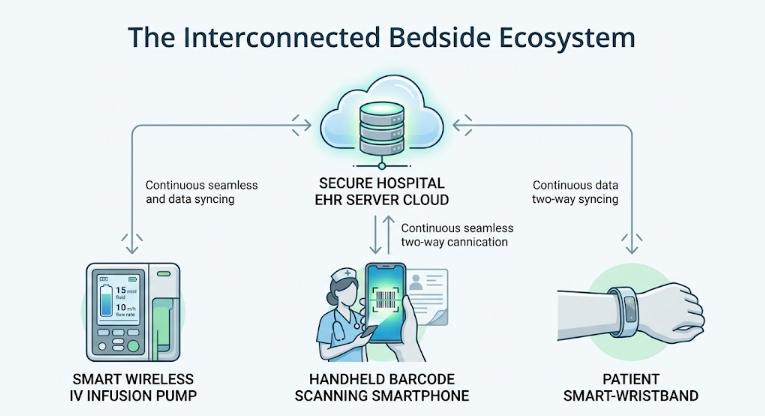
Beyond the main hospital computers, technology has moved directly to the patient’s bedside through mobile devices and smart medical gear. Nurses now carry secure smartphones or tablets equipped with specialized medical apps that allow them to scan patient wristbands before administering medication. This process verifies the “Five Rights” of nursing: the right patient, the right drug, the right dose, the right route, and the right time.
Furthermore, smart intravenous (IV) pumps are now connected directly to hospital wireless networks. If a nurse programs a dosage rate that falls outside safe parameters, the pump will automatically halt and sound an alarm. This tight integration between software systems and physical medical hardware creates a powerful safety net, drastically minimizing human error in high-stress medical environments.
The Interconnected Bedside Ecosystem
To visualize how these tools work simultaneously to protect a patient, consider the current standard loop of a bedside environment:
Comprehensive Technology Comparison Matrix
To clearly see how these individual tools impact daily hospital operations, we can compare their primary clinical functions alongside the specific problems they resolve for floor nurses.
| Technology Type | Primary Function in Care | Major Benefit to Nurses | Key Challenge Addressed |
| EHR Software (Epic/Cerner) | Centralized digital patient profiling | Instant data sharing across medical teams | Eliminates lost paper files and messy handwriting errors |
| Predictive Analytics AI | Monitoring shifts in patient vital signs | Early warning alerts for critical conditions | Catches life-threatening conditions before visible symptoms show |
| Barcode Medication Scanning | Verifying patient identity via wristbands | Elimination of accidental dosage errors | Guarantees the right medicine goes to the right patient |
| Smart IV Infusion Pumps | Network-connected medicine delivery | Automated safety limits on fluid rates | Prevents accidental rapid over-medication entry errors |
| Secure Care Communication | Encrypted instant messaging platforms | Real-time direct connection with doctors | Eliminates long delays caused by traditional paging systems |
Telehealth Infrastructure and Remote Monitoring
The boundaries of nursing care have expanded far beyond the physical walls of a hospital or clinic. Thanks to advanced telehealth infrastructure and remote patient monitoring tools, nurses can now track and manage chronic illnesses while patients stay comfortable at home.
Wearable sensors can continuously monitor a patient’s oxygen levels, blood sugar, or heart rhythms and send that data directly to a centralized nursing dashboard miles away. If a patient’s metrics fluctuate outside a safe zone, an alert triggers a telehealth nurse to call the patient, adjust their treatment framework, or coordinate emergency services. This continuous loop of digital care keeps vulnerable individuals out of crowded hospital emergency rooms and lowers overall healthcare costs.
Managing Chronic Disease Remotely
For patients dealing with long-term issues like heart failure or diabetes, remote monitoring is a complete game changer. Instead of waiting for a monthly checkup, a nurse reviews automated daily updates. If a patient with heart failure suddenly gains unexpected weight over a 48-hour period, the system flags it as potential fluid retention. The nurse can intervene immediately, adjusting medications over the phone and preventing an emergency hospital readmission.
Navigating the Ethical and Security Challenges
Every time a new technology is introduced into medicine, it brings fresh challenges regarding ethics and security. Because electronic records store everything about a person’s physical and mental health history, they are prime targets for cyberattacks. Hospital networks must invest heavily in firewalls, multi-factor authentication, and constant software updates to keep hackers out.
Additionally, nurses must deal with a phenomenon known as “alert fatigue.” Because medical monitors, smart pumps, and EHR systems sound alarms for dozens of minor issues throughout a shift, there is a real danger that an exhausted nurse might tune out a critical warning. Informatics specialists are constantly working to fine-tune these algorithms, ensuring that alarms only trigger when a patient genuinely requires urgent attention.
Looking Ahead: The Future of HealthTech in Nursing
As we look toward the future, the integration of technology in nursing will only accelerate. Artificial intelligence is poised to assist with automated documentation, allowing nurses to speak their notes out loud into voice-recognition software that populates charts instantly, freeing up hours spent typing at a desk. Virtual reality environments are also becoming standard tools for practicing complex emergency scenarios safely before stepping foot on a real hospital floor.
Ultimately, technology is not replacing the human touch that defines the nursing profession; it is enhancing it. By automating repetitive administrative tasks, eliminating filing paperwork, and providing real-time clinical safety alerts, advanced software allows nurses to step away from computer screens and spend more meaningful time where they are needed most—directly at the bedside, delivering compassionate patient care.
Frequently Asked Questions
What exactly is nursing informatics?
It is a specialty that combines nursing science with data analytics and information technology to manage healthcare data, improve hospital communication, and boost patient safety.
How do advanced EHR systems protect patient safety?
They automatically run checks to flag potential drug allergies, alert staff to dangerous medication interactions, and monitor real-time changes in vitals to catch early signs of critical illness.
What is alert fatigue, and why is it a challenge?
Alert fatigue happens when medical devices sound alarms too frequently for minor issues. This constant background noise risks exhausting nurses, potentially causing them to miss a critical warning.
How does remote monitoring help chronic disease care?
It uses wearable sensors to transmit a patient’s vitals from home directly to nurses. This allows medical teams to catch health issues early and prevent unnecessary emergency room visits.
About The Author
Ella Thompson is a senior content strategist for myassignmenthelp, specializing in designing educational frameworks and digital workflows that help university students balance technical studies with academic success.